
Mosquito Control
Hernando County Mosquito Control works to protect public health and enhance residents’ quality of life by reducing mosquito populations through Integrated Pest Management (IPM). The program combines surveillance, source reduction, biological and chemical control, and community education. Mosquito Control also responds to resident service requests and monitors mosquito-borne illnesses across the county.
About Mosquito Control
We are dedicated to enhancing the quality of life for residents by reducing mosquito populations that pose a threat to public health or create nuisance conditions.
Effective mosquito control uses Integrated Pest Management (IPM):
-
- Surveillance
- Source Reduction
- Control (biological/chemical)
- Public Education & Outreach


Because mosquitoes can breed in as little as ¼ teaspoon of water, eliminating standing water is critical.
-
- Lifecycle averages 7–10 days from egg to adult
- Check property weekly for water-holding items
- Dump or cover containers
- Store or properly dispose of tires
- Remove water-holding outdoor items
- Eliminate certain aquatic plants:
- Water hyacinth
- Water lettuce
- Cattails
Mosquito Control Using IPM

Surveillance
Surveillance provides essential data to guide treatment decisions.
- Mosquito Traps: Measure mosquito species and activity levels.
- Sentinel Chickens: Detect mosquito-borne viruses present in the area.
- Landing Rate Counts: Identify biting activity; high counts may trigger spray treatments.
- Field Inspections: Conducted daily as technicians respond to service requests and monitor breeding locations.
Public Education/Outreach
Mosquito Control provides educational opportunities throughout the community:
-
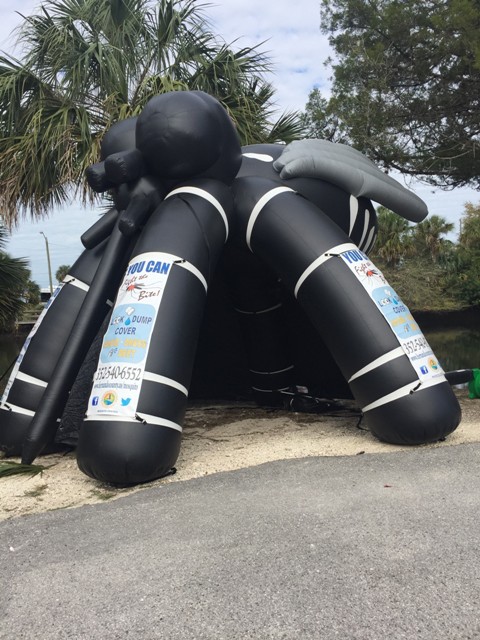
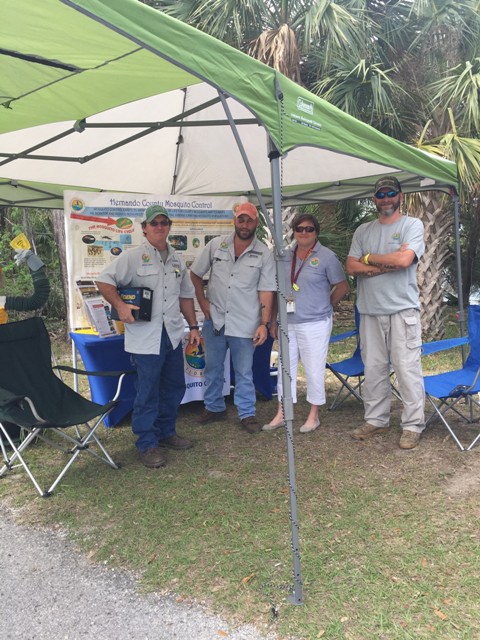
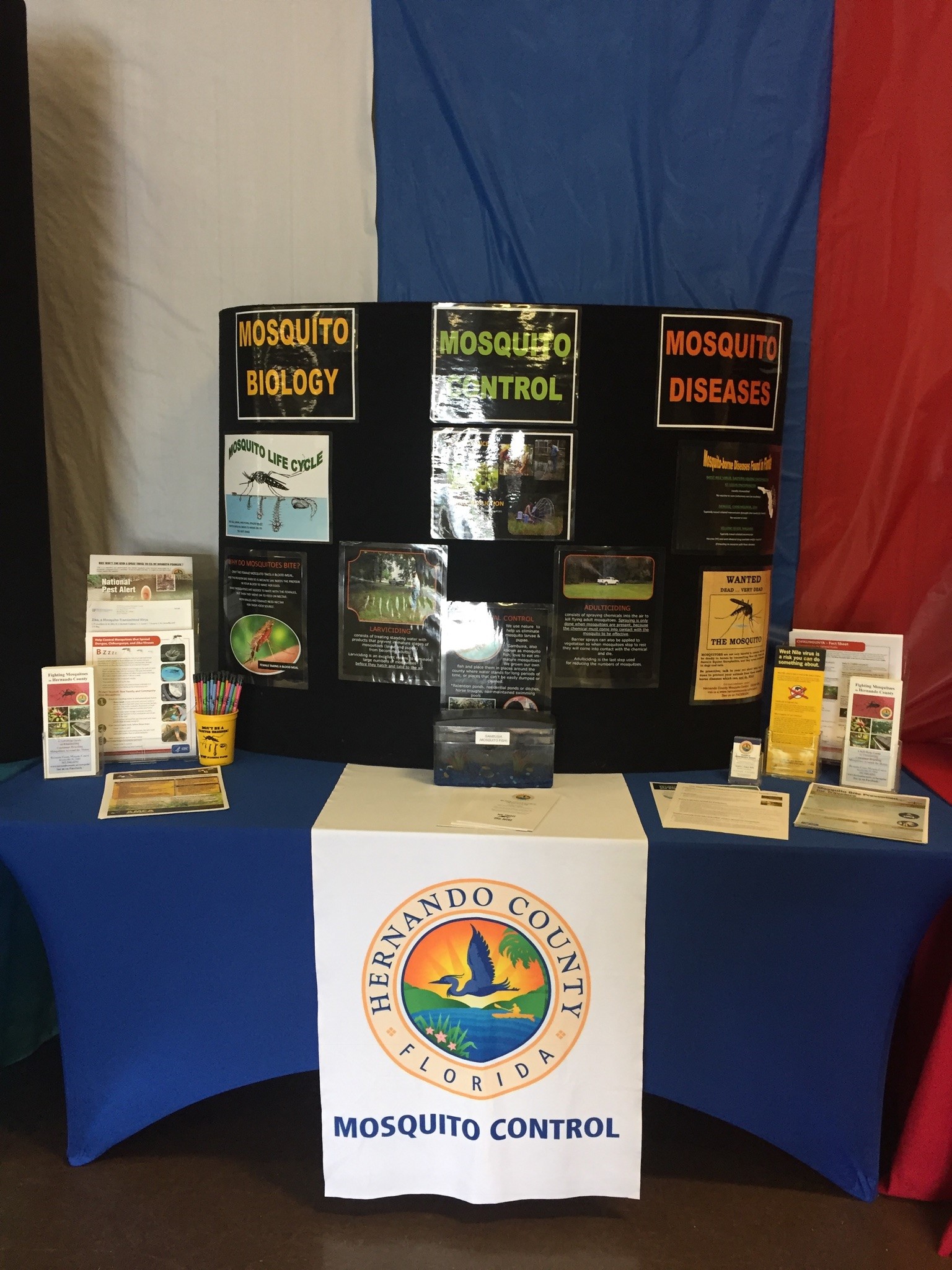
- Event participation: Swampfest, Sheriff’s Night Out, Hurricane Expo, Touch-a-Truck, Health Fairs
- Presentations for HOAs, businesses, community groups
- Programs for schools, science fairs, Earth Day events

Recent Activities
View Mosquito Control operations over the last 30 days.
Click symbols on the activity map for service dates.
Mosquito Control Liens / Payoffs
To check for a lien:
-
- Visit the Hernando County Tax Collector’s website
- Search the property
- The bottom-third section lists liens
- Mosquito Control liens are marked MC under “Description”
- Balance shown is valid through the end of the month
- For future payoff amounts, call (352) 540-6552
Mosquito-Borne Diseases
Acquired outside the U.S. but may become locally transmitted if a mosquito bites an infected traveler:
Control is the means by which we eliminate and prevent immature and adult mosquito populations.
Pesticides are used when we can't place fish.
Mosquito Fish
-
- Mosquito Fish are raised and placed in any water bodies that will sustain them.
- The fish can eat hundreds of mosquito larvae and pupae every day.
- They are a tremendous resource for controlling mosquitoes.
- Nature also gives us some help by providing creatures in the water and on land that like to feed on mosquitoes in all stages of life.
Larvicides are placed in the water to eliminate and prevent the immature stages of mosquitoes (larvae/pupae).
This is the best means to fight mosquitoes because they are stopped before they take to the air.
Types of Larvicides
Oils and films
-
- Oils and mono-molecular surface films are used to control pupae and late-fourth instar larvae.
- A small amount of this product will sheet across the surface of water and interfere with their ability to attach to the surface of the water to breathe.
- These products are used only when an adult emergence will occur without treatment and have little effect on other aquatic insects.
Bti – Bacillus thuringiensis israelensis
-
- A naturally occurring soil bacterium that produces proteins in crystalline form.
- When mosquito larvae eat the crystals, the proteins attack their gut wall, paralyzing the larvae.
- Has a highly specific mode of action and is of minimal environmental concern.
- Quickly biodegrades and leaves no residue.
- HCMC uses Bti in granular, briquettes, and liquid formulations.
Bs – Bacillus sphaericus
-
- A common soil-inhabiting bacterium producing a protein toxin used to control mosquito larvae.
- Applied as a granular formulation to control larvae in highly polluted water.
- Used where disease-carrying Culex species are found as residual control.
- Nontoxic to non-target organisms.
Spinosad
-
- Derived from a naturally occurring soil bacterium with a unique mode of action.
- Mosquito larvae are susceptible through ingestion and contact.
- Classified as a Reduced Risk product by the EPA and OMRI Listed for use around organic agriculture.
- Breaks down quickly and does not bioaccumulate.
- Recipient of the Presidential Green Chemistry Challenge Award.
Methoprene
-
- An insect growth regulator used to control mosquito larvae.
- Prevents adult mosquitoes from emerging from the immature stage.
- Field inspectors use Methoprene to pre-treat known flooding areas before major storms.
Adulticides are used against flying adult mosquitoes.
-
- It is important to note that certain species are not out at night and will not be affected by spray missions.
- These mosquitoes must be dealt with through Source Reduction (dump/cover/remove).
Spraying decisions follow state guidelines and are based on:
-
- Surveillance and trap data
- Daily field inspections
- Landing rate counts
- Resident complaints
Exceptions
-
- No Spray Zones: Areas where residents have opted out
- Sensitive Lands: Spray restrictions apply near SWFWMD areas, state forests, etc., unless a medical emergency is declared
Contact
Mosquito Control
15400 Wiscon Rd.
Brooksville, FL 34601
📞 Phone: (352) 540-6552
Important Info
West Nile Updates
Florida Laws That Govern Us
Mosquito Control districts in Florida are governed under:
Sign up to our Newsletter
Stay up to date on the county's activities, events, programs and operations by subscribing to our eNewsletters.